Markeren:
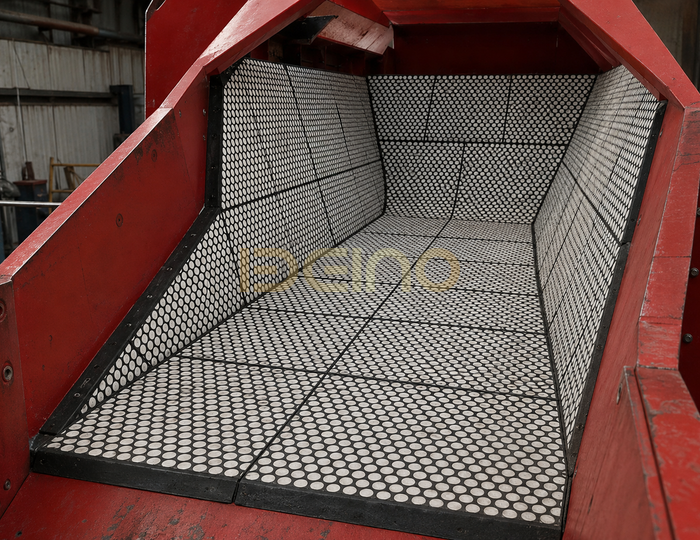
Rubberen keramische voering voor mijnbouw overdrachtsschachten Elacera
- Ik weet het niet.Productbeschrijving
Elacera rubber keramische voering combineert alumina keramiek, impact-absorberend rubber en stalen ondersteuning om mijnschachten, hoppers en overdrachtspunten te beschermen.
Rubberen keramische voering voor overdrachtsschachten in de mijnbouw
Elacera rubber keramische voering is ontworpen om mijnbouw overbrengingsschachten, hoppers, containers, en andere bulk materiaal handling apparatuur te beschermen tegen ernstige impact en schuif slijtage.
De bekleding combineert hooghard alumina keramiek met botsabsorberend rubber.een stalen steunplaat met montagebouten of -bouten kan worden toegevoegd om een drie-in-één keramisch-rubber-staalconstructie te vormen.
Dit composietontwerp zorgt voor een slijtvast oppervlak terwijl het de impact van erts, steenkool, klinker en andere schuurbare bulkmaterialen dempt.
Waarom slijten mijntransferschachten zo snel?
De meest ernstige slijtage treedt meestal op bij voedingspunten, de bodem van de schacht, de hoeken,en materiële impactgebieden.
Gewone stalen bekleding kan geleidelijk dunner worden, terwijl keramische tegels zonder een inslag-absorberende laag kwetsbaar kunnen zijn onder harde materialen.
Rubber-keramische composietvoering oplost beide problemen:
- Alumina keramiek is slijtagebestendig.
- Rubber absorbeert schokken en trillingen.
- De staalondersteuning biedt structurele steun.
- Door de bouw van de bouten kunnen de afzonderlijke panelen gemakkelijker worden vervangen.

Composite Liner Structure
Aluminium keramische slijtagelaag
Hooghardheid alumina keramiek vormt het primaire slijtage oppervlak.
Vierkante of rechthoekige keramische tegels zijn ook verkrijgbaar voor toepassingen die worden gedomineerd door slijtage.
- Ik weet het niet.
Schokabsorberende rubberlaag
De rubberen laag dempt de materiële impact, vermindert trillingen en ondersteunt de keramische elementen.De rubberdikte en -formulering kunnen worden geselecteerd op basis van het slagniveau en de werktemperatuur.
Staalsteunplaat
Voor drie-in-één-voeringen wordt de staalsteunplaat geleverd met gelaste stuivers of bevestigingsbouten.Deze structuur is geschikt voor hardwerkende parachutes waar veilige mechanische installatie en modulaire vervanging vereist zijn.
Technische specificaties
| Artikel 1 |
Beschikbare specificatie |
| Producten |
Rubberen keramische composietvoering |
| Structuur |
Keramiek + rubber / keramiek + rubber + staal |
| Keramisch materiaal |
92% of 95% aluminium; ZTA optioneel |
| Keramische vorm |
met een diameter van niet meer dan 20 mm |
| Aluminiumdichtheid |
tot ongeveer 3,75 g/cm3 |
| Rubbermateriaal |
natuurlijke rubber of rubber voor speciale doeleinden |
| Staalondersteuning |
met een breedte van niet meer dan 50 mm |
| Algemene dikte |
Gewoonlijk 10 ̊50 mm; aanpasbaar |
| Panelgrootte |
Op maat gemaakt volgens tekeningen |
| Installatie |
Kleefbinding of aansluiting met bouten |
| Werktemperatuur |
Gezocht naar de rubberverbinding |
| Kleur |
witte keramiek met zwart rubber |
| Aanpassing |
Afmeting, dikte, keramische kwaliteit en opstelling van de bouten |
Belangrijkste voordelen
- Gecombineerde weerstand tegen inslag en slijtage door schuiven
- Hooghard keramisch slijtagevlak
- Rubberdebuffering voor inslagen en trillingen
- Beveiligde aansluiting
- Modulaire vervanging van afzonderlijke panelen
- Verminderde directe slijtage van de uitrustingshulp
- Geometrie van het paneel op maat voor onregelmatige schommeloppervlakken
- Geschikt voor natte, droge en schuurbare bulkmaterialen
Typische toepassingen
Rubber-keramische voering wordt veel gebruikt in:
- Bergbedrijfskruipen
- met een vermogen van niet meer dan 10 kg
- Afvoerputten van de breekmachine
- Systemen voor de behandeling van steenkool
- Mineraalverwerkende installaties
- Overdrachtspunten van cementfabrieken
- Materialenbehandelingsapparatuur voor staalfabrieken
- Steenkoolputten van elektriciteitscentrales
- Port bulkmateriaalterminals
Silinderkeramiek of vierkantkeramiek?
De keramische cilinders worden omgeven door rubber, en de keramische cilinders worden omgeven door rubber.waardoor de composietvoering effectiever de inslag kan absorberen.
Vierkante of rechthoekige keramische tegels bieden een groter continu keramisch oppervlak en zijn geschikt voor gebieden waar slijtage door schuiven ernstiger is dan directe impact.
Verschillende structuren kunnen worden gecombineerd in één schacht volgens de slijtageverdeling.
Installatieopties
Twee-in-één keramische rubbervoeringen kunnen met behulp van een geschikte industriële lijm rechtstreeks aan een bereid staaloppervlak worden gebonden.
Deze optie is geschikt voor grotere panelen, hoge impactomstandigheden,en toepassingen die in de toekomst gemakkelijker moeten worden vervangen.
Voor de installatie moet het oppervlak van de apparatuur worden schoongemaakt, geïnspecteerd en voorbereid om een goed contact en een veilige bevestiging te garanderen.
Kwaliteitscontrole
Voorafgaand aan de bevalling kunnen de Elacera-inlayers worden geïnspecteerd op:
- Keramisch materiaal en oppervlakkegehalte
- Afmetingen van de panelen en totale dikte
- Kwaliteit van vulcanisatie van rubber
- Verbinding van keramiek met rubber
- Afmetingen van de staalondersteunende plaat
- Boltpositie en draadstand
- Vlakheid van het paneel en randtoestand
- Verpakking en identificatie van het product
Verpakking en levering
Rubber-keramische composietvoering wordt op versterkte houten pallets of in houten dozen verpakt.Beschermingsmiddelen worden tussen de panelen geplaatst om schade te voorkomen tijdens het hanteren en internationaal vervoer.
Op maat gemaakte verpakkingen en productetiketten kunnen worden geleverd volgens de eisen van het project.
Voor de selectie vereiste informatie
Om een geschikte voeringstructuur aan te bevelen:
- Tekeningen van de apparatuur of interne afmetingen
- Materiaal dat wordt behandeld
- Deeltjesgrootte en hardheid
- Hoogte van de val en richting van de slag
- Materialen doorvoer
- Werktemperatuur
- natte of droge omstandigheden
- Bestaand materiaal en dienstverband van de voering
- Voorkeur aan installatiemethode
Veelgestelde vragen
1Wat is het verschil tussen twee-in-één en drie-in-één?
Twee-in-één-inlegers bestaan uit keramiek en rubber en worden normaal met lijm geïnstalleerd.
2Zijn cilindrische keramische voering geschikt voor gebieden met een hoge impact?
Ja, cilindrische keramische elementen die in rubber zijn ingebed zijn geschikt voor gebieden die blootgesteld zijn aan een gecombineerde impact en slijtage omdat het omringende rubber de impact van het materiaal helpt onderdrukken.
3Kan de grootte van het paneel en de positie van de bouten aangepast worden?
De afmetingen van het paneel, de totale dikte, de keramische opstelling en de plaatsen van de bouten kunnen worden vervaardigd volgens de tekeningen van de apparatuur.
4Is 92% of 95% alumina aanbevolen?
De selectie is afhankelijk van het slijtmateriaal, de bedrijfsomstandigheden en het projectbudget.ZTA-keramiek kan ook worden overwogen voor veeleisendere inslagomstandigheden.
5Kunnen er in dezelfde chute verschillende voeringstructuren worden gebruikt?
Ja, in de zones met hoge impact kunnen cilindrische rubber-keramische voeringen worden gebruikt, terwijl in de zones met een glijdende slijtage vierkante keramische composietvoeringen kunnen worden gebruikt.
6Hoe worden beschadigde panelen vervangen?
Met het bolt-on-ontwerp kunnen afzonderlijke panelen worden verwijderd en vervangen zonder de volledige ruitvoer te vervangen.
7Kunnen deze voering in natte omstandigheden worden gebruikt?
Ja, maar de rubberformule, de staalbescherming en de installatiemethode moeten worden gekozen op basis van de vocht- en chemische omstandigheden.
8Hoe kan ik een offerte krijgen?
Stuur de tekeningen van de apparatuur, de afmetingen van de voering, de bedrijfsomstandigheden en de benodigde hoeveelheid naar ons engineering team.
Over Elacera
Hunan Yibeinuo New Material Co., Ltd. is gespecialiseerd in industriële slijtagebescherming met behulp van alumina-keramiek, rubber-keramische composietvoeringen en op maat gemaakte keramisch beklede apparatuur.
Elacera levert slijtagebeschermingsoplossingen voor mijnbouw, cement, staal, thermische energie, kolenverwerking, havens, chemische verwerking en bulkmateriaaltransportsystemen.
E-mail:Amy@ybnceramic.com
WhatsApp: +86-15074879989
Website:De Commissie heeft de Commissie verzocht de volgende informatie te verstrekken:

 Uw bericht moet tussen de 20-3.000 tekens bevatten!